The AI cost no one is budgeting for
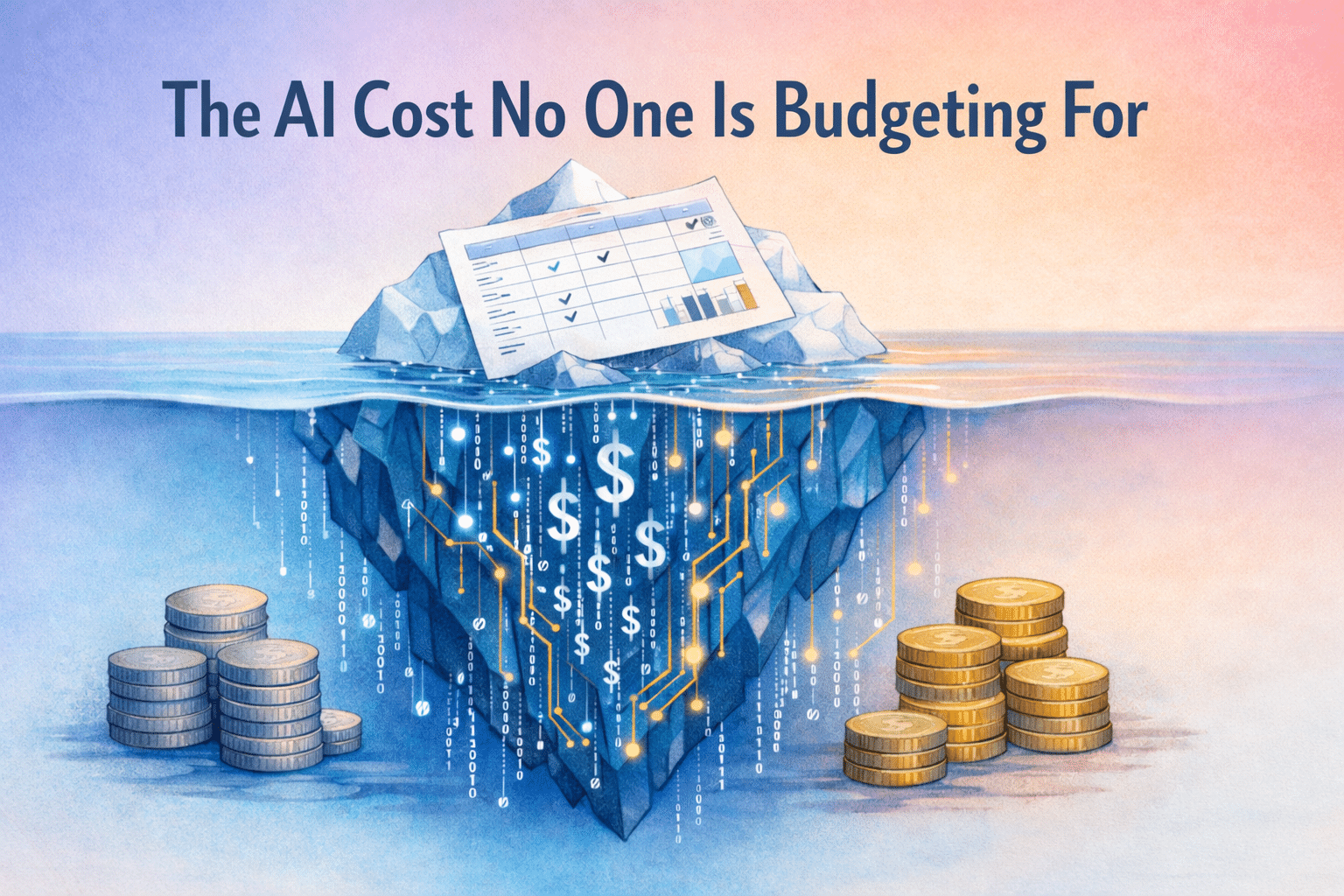
In 2025, nearly 80% of US stock market gains were concentrated in AI companies – the likes of Amazon, Microsoft and Nvidia. While technology provider SAP predicted that businesses in the UK would increase their investment in AI adoption by 40% in the next two years.
Numbers like these have sparked feverish debate about whether we’re in an economic AI bubble, not dissimilar to the dotcom bubble at the end of the last century. Analysts are worried the hype around AI could result in financial catastrophe a few years down the line.
But the financial risks go beyond the obvious stock market dangers. Cultural compromises driven by AI could be just as costly, and soon.
AI-induced pressure trickles down
As well as inflating the market cap of big tech, the zeal with which some are heralding the age of AI is having a knock-on effect across many other sectors. The aforementioned SAP report, published in October, found that over three quarters of UK executives believe AI will achieve a positive return on investment in one to three years. In other words, business leaders are betting big on AI tools while shareholders with sky-high expectations look on. But what about the employees?
In some instances, AI is being put at workers’ disposal accompanied by an exhortation to use it, but with precious little guidance about how. EY’s 2025 Work Reimagined Survey found that only 11% of employees are receiving adequate AI training. There’s a vague expectation that everyone should become more efficient, but often with a lack of direction about how to achieve said efficiency. The risk is whole offices of employees cultivating neuroses about whether they’re the only ones who don’t know what to do with the latest AI tool. At the same time, analysis from XFunnel found major concerns from people that their employers are using AI to monitor and track them – a sign that psychological safety is in danger of evaporating in the AI age.
What gets measured gets done
The pressure to harness AI also raises difficult questions around performance, reward and recognition. As organisations seek to understand how AI can change the game for them, many accept that experimentation – and failure – are likely to be part of the process. So, should we incentivise people to try using AI for as many tasks as possible, even if output drops or some outcomes are unfavourable?
Meta has told its employees that, as of this year, they will be evaluated based on their “AI-driven impact”. This makes sense in a corporation whose business is AI. Even so, there are challenges. How do you measure the extent to which a given impact was AI driven? And what if someone makes a hugely positive impact that isn’t particularly dependent on AI – does that count for less?
If the tech giants are wrestling with these issues, the task for people managers and reward professionals in other sectors seems daunting.
Perceptions of wellbeing might need to change
According to government statistics, 17.1 million working days were lost due to work-related stress, depression or anxiety in the 2022-23 financial year. Burnout has become a buzzword amid people feeling overworked and unable to switch off, and many companies have taken steps to increase flexibility and give employees access to support when they feel frazzled.
However, AI might introduce a different wellbeing-related problem: a lack of mental fitness. As employees increase their use of AI tools to brainstorm ideas, write reports or carry out creative tasks, there’s a danger that mental fitness will dwindle and skills could fade. The parts of our jobs that once challenged us intellectually, stimulated us mentally and from which we derived satisfaction could, to some extent, disappear. If this happens, it’s unlikely to be good news for either workers or employers.
Time to revisit your employee value proposition
Falling psychological safety, rising intellectual decrepitude and precious little notion of how to measure individual success can all have a devastating impact on workplace culture. So far, so gloomy. But, as always, there is hope and optimism to be found. The world of work is well used to disruption from new technologies, and smart businesses understand that bringing their people along on the journey to the new world is key.
To meet the challenges of AI, workplaces are going to have to adapt, as are people and practices. The key to how successfully a business responds to this is wholly dependent on keeping its employee value proposition (EVP) in sight. An EVP is the promise made between employer and employee that defines how both perform and grow together. In many ways, we have an opportunity to flex and strengthen our EVP in this moment.
If AI exposes a gap between what our EVP promises and what employees actually experience, it gives us a chance to do something about it.
It might be rethinking development opportunities or reimagining recognition criteria. We can use our EVP as a lens through which to view the changes AI is bringing. If key tenets of our proposition are in danger of being compromised, we should either act to protect them or reevaluate. We might find that the ‘deal’ we offer people today won’t stand up tomorrow, so we need to identify a new one. Why? Because the age of AI might be here, but that doesn’t mean the age of the employee is over.

Written by Alastair Atkinson - Director of Consultancy at scarlettabbott